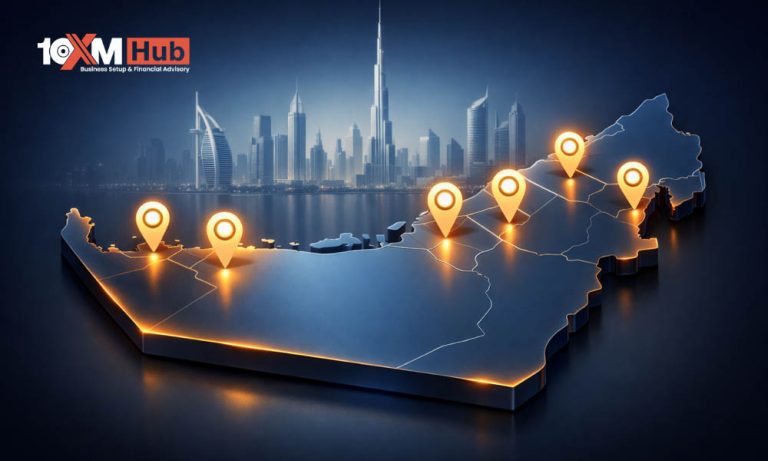
From being a petro-state to a knowledge-based economy, the UAE is experiencing incredible growth. Both Dubai and Abu Dhabi are now considered safe havens for capital from both East and West. Investors and business owners looking to expand their footprint globally are now moving to Dubai, and in that context, having a business in Dubai free zone makes sense. The government is now focusing on paperless initiatives, and that approach is making it even easier to complete the company formation Dubai free zone. This blog talks more about the top free zones in the UAE for launching your business in 2026, along with important details.
What Is a Free Zone in the UAE?
Before you go for a business setup in Dubai freezone, it is important to know how this is different from a venture in the mainland. A free zone is a designated geographical area where businesses operate under a unique regulatory framework that’s different and separate from the UAE Mainland laws. Free zones allow 100% foreign ownership, which makes these locations relevant for global entrepreneurs.
To open free zone company Dubai, an investor needs to choose the right jurisdiction tailored to their industry. Each one has a specific built-in ecosystem for different industries, such as logistics, tech, and media. The process to set up freezone company Dubai is simpler compared to the mainland, which is why the interest of the global community is unmatched.
Key Benefits of Free Zone Company Setup
Before you decide to open business in Dubai free zone, check some incredible advantages of the option:
- 100% Capital and Profit Repatriation
- Tax Efficiency
- Exemption from Import and Export Duties
- Incredible Ecosystems
- Simplified Employment and Recruitment
- 100% Capital and Profit Repatriation: Unlike many global jurisdictions, there are no capital controls in the UAE. You can transfer 100% of your initial investment and all accumulated profits to any bank account worldwide. There is no withholding of taxes on dividends, no matter whether the parent company is located abroad.
- Tax Efficiency in 2026: While the UAE has a federal Corporate Tax, Free Zone entities only benefit from the AED 375,000 0% threshold if they forgo their “Qualifying” status. For QFZPs, the 0% rate applies only to qualifying income; all “non-qualifying” income is taxed at a flat 9% without any threshold.
Before making up your mind on a business setup in Dubai freezone, you should know that a company must qualify as a Qualifying Free Zone Person (QFZP) to maintain a 0% Tax Rate. That requires maintaining “adequate substance” and earning revenue from transactions with other Free Zone entities or international trade. Proving tax eligibility requires preparing audited financial statements.
- Exemption from Import and Export Duties: Another reason to register company in Dubai free zone is the exemption from duties. You can get raw materials or finished goods into the zone with 0% import duty, which is a direct saving on the standard 5% Mainland tax. For traders using Dubai as a transit point, there is also the advantage of storing, re-packaging, or processing goods within the Free Zone and shipping them globally.
- Incredible Ecosystems: If you decide to set up business in Dubai free zone, you can benefit from existing ecosystems that have been designed with care. These hubs also attract a high concentration of niche professionals, and there is access to purpose-built facilities. Shared infrastructure isn’t just convenient for businesses but also cost-effective.
- Simplified Employment and Recruitment: Free Zone companies enjoy a digitized visa process managed through the specific Authority’s portal. While the company remains the legal sponsor, the Authority simplifies the “Establishment Card” and quota management. Furthermore, entrepreneurs with a certified project valuation of 500,000 AED can apply for a 5-year Golden Visa, providing long-term residency.
Top Free Zones in UAE for Business Setup in 2026
Dubai free zone business setup is no longer just about the license, but choosing the ecosystem that works and is aligned with your specific industry. Here are the top options:
- Meydan Free Zone
- IFZA (International Free Zone Authority)
- RAKEZ (Ras Al Khaimah Economic Zone)
- DMCC (Dubai Multi Commodities Centre)
- JAFZA (Jebel Ali Free Zone)
- DAFZA (Dubai Airport Freezone)
- Meydan Free Zone: Located near the heart of Downtown Dubai, Meydan Free Zone is the most tech-forward zone, as it operates on a paperless, 24/7 digital model. Meydan’s Fawri process is a standout, allowing entrepreneurs and investors to secure a digital trade license in under 60 minutes. Meydan also has a “Dual Access” model, allowing Free Zone companies to lease physical office space on the mainland with an easy NOC process.
- IFZA (International Free Zone Authority): IFZA is the most agile zone for a remote-first workforce and is designed for consultants, digital marketers, and e-commerce players who don’t need physical stock storage. The 100% digital onboarding is spot-on, and if you want to start a company in Dubai free zone without ever entering the UAE, this is your option. With packages starting as low as 12,900 AED, this is the ideal choice for solo entrepreneurs.
- RAKEZ (Ras Al Khaimah Economic Zone): Although located in the neighboring Emirate, RAKEZ is still a big option for Dubai free zone business setup. There are packages for 14,000 AED, which include the license, along with a co-working space and a UAE Residency Visa. For mid-scale manufacturing, this remains the preferred choice. This could also be the best choice for business setup in Dubai freezone for women, as there are dedicated packages to empower female founders.
- DMCC (Dubai Multi Commodities Centre): DMCC is often named as the ultimate global free zone by entrepreneurs and remains the premier hub for high-value trade. As of 2026, there are over 24,000 companies here, which tells a lot about this free zone. If you are setting up a business in Dubai freezone in the field of AI, the expanded DMCC AI Centre in Uptown Tower is another highlight, which also offers access to venture capital networks. DMCC has also introduced SME-specific bundles starting around 43,780 AED.
- JAFZA (Jebel Ali Free Zone): Often considered the backbone of Dubai’s manufacturing, JAFZA promotes the “Made in UAE” initiative like no other. It offers direct, bonded access to Jebel Ali Port and has a new integrated corridor between the port and Al Maktoum International Airport (DWC). Bigger companies can easily move goods from sea to air in record time. JAFZA is meant for heavy industries and offers massive plots of land, warehouses, and high-capacity power grids.
- DAFZA (Dubai Airport Freezone): This is often called the aviation & pharma hub and is located next to Dubai International Airport (DXB). DAFZA has enhanced its “Halal Trade & Marketing Centre” and specialized pharma-cold-chain facilities, which remain unmatched. There are also supply chain features that are hard to match, including 24/7 rapid customs clearance. If you are looking for a premium corporate environment for company incorporation in Dubai free zones, this is your preferred choice. Many European and American multinational companies have branches here.
Factors to Consider When Choosing a Free Zone
With all those options and perks listed above, it may seem easy to decide about business setup in Dubai freezone, but there are certain aspects to consider:
- Business Activity Permissibility
- Visa Quotas and Physical Space Requirements
- Banking Compatibility and KYC Reputation
- Logistics & Industry Infrastructure
- Future Scalability
- Business Activity Permissibility: Free zones have specific activity lists, so it is critical to ensure that the one you choose works for your niche. A mismatch can lead to a rejected license and other complications. Some activities, such as fintech, healthcare, legal and educational institutes, require further approvals from the UAE Central Bank or KHDA. Some zones may have fast-track agreements with these regulations, but not all do. Also, check whether the zone allows you to bundle multiple activities under one license fee.
- Visa Quotas and Physical Space Requirements: The next thing to consider for business setup Dubai free zone is specific requirements for physical space and limitations on visa quotas. While “flexi-desks” or “smart offices” are the cheapest, there could be visa quotas limited to 2 to 3 visas. For instance, if you plan to scale your team to 10+ employees within a short time, you should consider the cost of a physically partitioned office from day one. For tax purposes, having a “Physical Presence” is becoming mandatory, so check that too!
- Banking Compatibility and KYC Reputation: Before you open free zone company Dubai, you should remember that not all zones are seen in the same light by UAE banks. Selected zones like DMCC, DIFC, and DAFZA are whitelisted in a way, because opening a corporate bank account can take about 4 weeks compared to 3 months in some zones.
- Logistics & Industry Infrastructure: If you are in e-commerce or trading, you have to consider overall infrastructure to ensure you don’t waste money on transport while trying to save some money on rent. For consultants and service providers, a prestigious address in Meydan or DMCC is better. Also, consider if you need a zone that offers specific things like cold storage or high-power grids, depending on the sector/activity.
- Future Scalability: Many entrepreneurs are now seeking to take advantage of the “Dual License” option. Some zones allow businesses to have an additional branch in the mainland at a discounted rate, ensuring access to the UAE public market without creating a separate company. As things change, you may need to take steps like adding shareholders or changing directors at some point, and those steps should be easy. Also, don’t forget to check the liquidation process and costs.
Cost of Setting Up a Free Zone Company in 2026
Many entrepreneurs and investors often have confusion about a Dubai free zone company setup cost. These are components that matter:
- License and Registration Fees
- Residency Expenses
- Mandatory Costs
- License and Registration Fees: The license cost is based on the number of business activities and the prestige of the jurisdiction. “License-only” packages for digital nomads or offshore consultants start at 12,500 AED. Functional setup in zones like DMCC or IFZA, the cost could be between 15,000 AED and 25,000 AED annually.
- Residency Expenses: The expected cost per person for a visa could be between 3,800 AED and 6,500 AED. This includes the Establishment Card, which ranges from 2,000 AED to 2,500 AED and must be renewed annually. Entry permit & change of status could cost around 1,500 AED. Medical fitness tests cost around 300 AED, while fast-tracking the results could mean spending about 750 AED approximately. Emirates ID, which has a 2-Year Validity, can range from 370 AED to 570 AED.
- Mandatory Costs: There are new regulatory costs that are no longer optional. This includes Corporate Tax Registration, but professional filing and a tax-compliant accounting system typically cost 1,500 AED to 3,000 AED. FTA-certified e-invoicing is now a must, which can mean spending another 1,500 AED to 5,000 AED annually, depending on invoice volume.
Conclusion
As you may know by now, business setup in Dubai freezone is probably the most resilient and profitable choice in 2026. However, the transition from “Tax-Free” to “Tax-Compliant” makes professional guidance essential. Before you start with the business setup Dubai free zone, make sure to connect with the expert consultants of 10XMHub for understanding the process. Let the experts explain what it takes to open free zone company Dubai and guide you with documentation and related tasks.
FAQS
Which free zone is best for startups in the UAE?
IFZA and Meydan Free Zone are the premier choices for startups for digital-first capabilities and competitive pricing. These zones have remote onboarding processes, making them ideal for consultants, e-commerce entrepreneurs, and tech-driven solopreneurs
Is freezone exempted from corporate tax in the UAE?
Free zone entities can benefit from a 0% Corporate Tax rate, but this exemption is strictly for “Qualifying Income” earned from international trade or other free zone entities.
Do free zone companies pay corporate tax in the UAE?
Whether a company actually pays the 9% corporate tax depends on its status as a “Qualifying Free Zone Person” and the nature of its annual revenue streams.
How long does freezone company registration take in 2026?
The initial trade license for most digital-first free zones can be issued in as little as 3 to 5 working days. What takes more time is corporate bank account opening, which can take as long as 8 weeks.
Does 10XM Hub handle license applications across all major Dubai free zones?
Yes, 10XM Hub provides comprehensive assistance for license applications across all premier jurisdictions, including DMCC, IFZA, JAFZA, and Meydan.
 info@10xmhub.com
 +971522527368