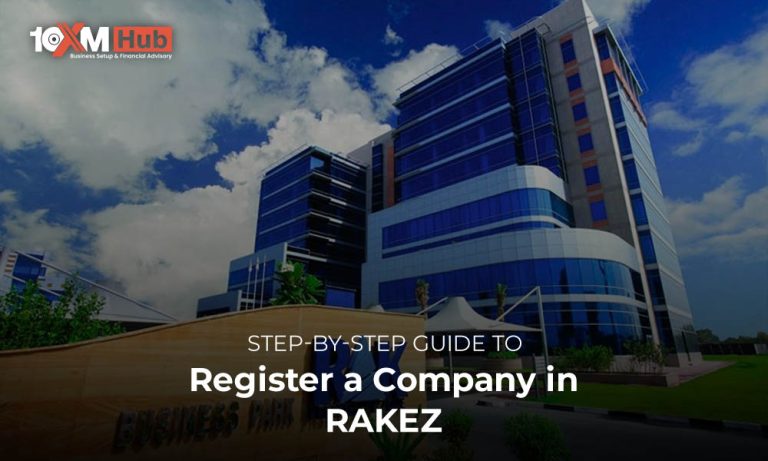
RAKEZ (Ras Al Khaimah Economic Zone) is a business and industrial hub launched by the government of Ras Al Khaimah to offer customisable investment solutions for global entrepreneurs. RAKEZ stands out for ensuring seamless access to a massive consumer market across the Middle East, North Africa, and beyond. Unlike many other setups, RAKEZ uniquely integrates both Free Zone and Non-Free Zone (Mainland) structures, giving business owners the ultimate flexibility in how they choose to run.
RAKEZ serves as the home to 100+ industries and 50,000+ companies, covering freelancers and startups to multinational corporations. It is recognised across the UAE as one of the most budget-friendly Free Zones. Here’s what you must know about business setup in RAKEZ.
Who Should Choose RAKEZ for Their Business Setup?
RAKEZ is best suited for:
- SMEs and Startups on a Budget: Small and growing companies and startups looking for a presence in the UAE without the excessive price tags will find RAKEZ to be the most financially viable option.
- Freelancers and Solopreneurs: Professionals working independently, digital nomads, and consultants who need an affordable UAE visa alongside a background to invoice international clients without hassles.
- E-commerce and Digital Brands: Businesses with online stores, drop-shipping companies, or marketplaces that need budget packages combined with fulfillment options backed by tech.
- Manufacturing and Industrial Giants: Industrial units that need large plots of customisable land and zones designed to handle heavy manufacturing and assembly, with utility and power support benefit from RAKEZ.
- Logistics: Companies that depend on moving goods benefit from RAKEZ’s location, which is close to ports, airports, and highway networks. Being here means accessing the best supply chain systems.
- Import and Export Businesses: Traders looking to use the UAE’s geographic position to move goods while maximising exemptions on customs and simplified documentation.
- Investors and Founders: Business owners and investors who want to stretch their seed capital also choose this hub, as they can redirect funds from leases into product development and marketing.
- Multinational Corporations: Established brands looking to set up a cost-effective branch or subsidiary in the UAE to test regional markets before bigger capital outflows.
- Tech Innovators: Media experts and professionals, consultancies, and tech startups also prefer RAKEZ as they need a community that offers specific licensing categories.
- Companies That Need Dual-Structuring: Entrepreneurs who want to expand into the UAE Mainland market like RAKEZ for its unique position to bridge operations between Free Zone and Mainland frameworks smoothly.
What Types of Business Licenses Does RAKEZ Offer?
Choosing the license is the most complex and critical step when setting up a business in RAKEZ. It defines more than a few things, including permitted activities, business structure, and regulatory requirements. Here are the options:
- Commercial License: Built for trading businesses in particular, this license permits companies to legally import, export, distribute, and store products from RAKEZ, making it a perfect option for wholesalers and retail merchants who are trying to make sense in the UAE.
- Service License: Designed for professionals, this license works best for agencies, consultants, and service-based firms to offer advice, management counseling, marketing, or IT support to clients. This license is limited only to services and not physical goods.
- Professional Individual License: Ideal for single proprietors and sole establishments where the business identity is directly tied to a specialised skill set, expertise, or personal credentials.
- General Trading License: The flexible option for trading entities with bigger operations, giving founders the freedom to trade, import, and export multiple and even unrelated product categories under one single license.
- E-Commerce License: This license is designed for online retailers, digital marketplaces, subscription services, and drop-shipping companies to trade goods/services via apps or websites.
- Industrial License: This license is designed for businesses dealing in manufacturing, assembly, or processing. With more complex compliance requirements, this license allows the import of materials, packaging goods, and exporting products to international locations.
- Media and Communication License: Meant for the creative sector, this license is perfect for agencies engaged in ads, content creators working online, video production houses, PR firms, and publishers.
- Educational License: This license allows individuals or groups to create educational consultancies, training centers, coaching institutes, or schools in RAKEZ.
A standout feature of RAKEZ is that it allows companies to combine commercial and professional activities under one license, enabling the choice to work in both RAKEZ Zone and the UAE Mainland.
What Are the Benefits of RAKEZ Free Zone Company Setup?
- 100% Foreign Ownership: Foreign investors and global entrepreneurs can enjoy absolute control over their business entity, retaining full ownership of their shares without needing a local UAE sponsor or partner.
- Capital and Profit Repatriation: Business founders and investors can transfer 100% of profits earned here in RAKEZ and capital back to their home country, and that ensures the perfect liquidity.
- Tax Exemptions: Companies operating within the Free Zone enjoy 0% personal income tax, 0% import and export duties, and zero currency restrictions.
- Corporate Tax (CT) Advantage: RAKEZ provides a compliant environment that allows eligible Free Zone persons to take full advantage of the UAE’s 0% CT rate on qualifying income.
- Low Setup Costs: It is among the cost-effective business hubs in the UAE, offering affordable license renewals, cheap rent, and budget visa packages that reduce overheads.
- Dual-Licensing Opportunities: Investors can get a Mainland license alongside their Free Zone structure, allowing them to trade directly within the local UAE market and international markets simultaneously.
- Efficient Administration: This is a one-stop point for all tasks, managing all aspects from licensing and visa processing to required clearances and bank account assistance.
- Customisable Facilities: RAKEZ has a variety of spaces to suit any business, including executive desks, offices, warehouses, and large yet customizable plots of industrial land.
- Fast Setup: With completely digitalised portals and better processes, companies can often get their license and approvals within a few business days.
- Effortless Bank Account Opening: Holding a RAKEZ license opens doors to local and international banks, making the banking setup smooth and predictable.
- Golden Visa and Residency: Setting up a company here simplifies the visa process for business owners, family members, staff, and employees, offering assured security.
- Strong Logistics Network: Positioned near highways, airports, and seaports like Saqr Port, it offers supply chain advantages for trading and industrial firms that are hard to match.
How to Start a Company in RAKEZ UAE?
Setting up a business in RAKEZ involves moving through a precise framework that bridges Free Zone regulations with federal compliance needs. While the first steps appear simple on paper, each phase has dependencies, legal nuances, and documentation and paperwork norms where a small oversight can mean delays or application rejections.
Here is a guide on business setup in RAKEZ UAE:
Step 1: Define Your Entity and Activity
- Corporate Structure: You must first determine whether your business will operate as a Free Zone Limited Liability Company (FZ-LLC) for multiple shareholders, a Sole Establishment for a single owner, or a Branch/Subsidiary of an existing company.
- Activity Mapping: RAKEZ allows numerous permitted business activities, and you must meticulously map your business to their legal codes. Selecting misaligned activities can drastically impact your license costs, approvals, and bank eligibility.
Certain specialised sectors, such as advanced manufacturing, healthcare, aviation, and specific financial services, require external approvals from federal ministries before RAKEZ can issue the license.
Step 2: Selection of Your Facility
Your choice of physical or virtual infrastructure dictates the entire scale of your setup. RAKEZ binds the number of available investor and employee residency visas directly to the square footage and type of facility you lease. Options include:
- Flexi-Desks: Ideal for digital brands, consultants, and startups who require an address to operate but do not need physical infrastructure. These packages typically limit the entity to 1 to 3 allocation visas.
- Offices, Warehouses, and Plots: For trading, logistics, or manufacturing companies, you must get space within RAKEZ. This requires discussing lease agreements, evaluating power grid abilities, and ensuring compliance with safety codes.
Step 3: Initial Approval and Trade Name
- Naming Conventions: You must submit three trade name options to RAKEZ for vetting. The names must strictly adhere to UAE guidelines, so avoid offensive language, religious references, political entities, or established global brand trademarks.
- Initial Approval: This is the preliminary review of your business intent. RAKEZ evaluates the background of the shareholders, the feasibility of the selected activities, and conducts security screenings to grant the initial green light.
Step 4: Drafting Legal Documents
Once initial approval is granted, you must draft and execute legal instruments, primarily the MOA and AOA for the new entity.
- Shareholder Agreements: These documents outline share capital distribution, voting rights, profit-sharing details, and management structures. They must be drafted with care to protect investments and satisfy both RAKEZ legal auditors and financial institutions.
- Board Resolutions: If an existing corporate entity is acting as a shareholder or if you are appointing a local representative, formalised board resolutions must be drafted and signed, and in most cases, they have to be attested.
Step 5: Final Submission and Fee Settlement
- Compliance Review: All application forms, legal documents, shareholder passport copies, and lease agreements are compiled into a master submission file for the RAKEZ registration department.
- Capital and Fee Clearance: Once you make payments for the selected license package, visa allocations, and facility leases, RAKEZ processes the final file and officially registers the company.
- Corporate Kit: Upon registration, RAKEZ issues your official corporate toolkit, which includes your Trade License, Share Certificate, Certificate of Incorporation, and the Lease Agreement.
Step 6: Establish Bank Account
Acquiring your trade license is only half the battle. Your company cannot legally trade, invoice, or move capital until you open a bank account within the UAE.
- Strict AML Protocols: UAE banks have rigorous KYC and AML regulations. To open an account, you must present a professional corporate profile, clear documentation about the source of wealth, and a detailed business forecast. Financial institutions independently categorise business activities by risk. If your license activities were poorly structured during the initial setup steps, major banks may summarily reject your account application.
While RAKEZ provides a dedicated online portal for direct applications, moving through the intricate dependencies, document attestation, and corporate banking requires a deep, up-to-date understanding of UAE laws to execute smoothly without dead ends. Just following RAKEZ company setup step by step isn’t enough unless you know the nuances.
What Documents Do You Need Before Starting RAKEZ Company Formation?
Here is a document checklist:
For Individual Shareholders
- Clear passport copies with at least 6 months of validity remaining.
- If you are a non-resident, a copy of your UAE entry stamp must be shared. If you are a resident, you need to provide a copy of the current visa.
- If you are currently a legal resident of the UAE, you must share the Emirates ID copy.
- If you are working or living in the UAE on an employment/family visa, you must submit an NOC from your current employer or visa sponsor,
- A UBO declaration is also required for unveiling the individuals who hold control or ownership over the entity.
- A recent utility bill, bank statement, or official lease agreement from your home country to verify your living address.
- A business plan is required only for specific activities, industrial licenses, or niche service setups.
For Corporate Shareholders
- Certificate of Incorporation: A certified copy of the parent company’s registration document.
- MOA / AOA: The original governing documents of the parent company, which must be attested.
- Board of Directors Resolution: A resolution stating the parent company’s intent to establish a new entity in RAKEZ.
- Certificate of Good Standing: Details that prove the parent company is active and compliant. Check with your consultant to know how you can show this.
- Manager Documents: Passport copies, UBO declarations, and visa for the General Manager or legal representative.
How Long Does RAKEZ Company Registration Take?
Here are the details:
- Registration: For most simple business launches and setups, the process is fast and can be wrapped in about 3 to 5 business days.
- External Approvals: If your activity requires third-party clearances from other ministries, the time needed will depend on how long those external bodies take.
- Document Work: The actual time starts only when all your paperwork, passport copies, and shareholding documents are formatted, vetted, and submitted to the RAKEZ portal.
Keep in mind that getting your Trade License is the first phase. Opening corporate bank accounts and finalising your visas are separate steps that follow.
How Much Does It Cost to Set Up a Company in RAKEZ?
RAKEZ remains a preferred choice among Free Zones for investors and entrepreneurs looking to expand in the region, and this is because the pricing is still lower than similar setups in Dubai or Abu Dhabi.
- Zero-Visa / Freelancer Baseline: For digital workers, solo consultants, or founders who do not require a visa or stay in the UAE, the license with a flexi-desk for address requirement starts at AED 6,000 and costs up to AED 11,200 per year.
- 1-Visa Package: For entrepreneurs looking to live and work legally in the UAE, the standard go-to package with one visa costs approximately AED 14,000 per year.
- Visa Quotas: If your business model requires bringing on a team or a co-founder, RAKEZ designs its pricing iteratively. A 2-visa package with a shared office should cost around AED 16,000, while a 3-visa package can mean spending around AED 18,000.
- Understanding Other Fees: Apart from the license and price of the initial package, you have to keep other overlooked costs in mind, including the establishment card, e-channel registration, and renewals.
- Visa Issuance: Once the company is approved, the visa processing brings personal variables, including medical fitness test, Emirates ID registration, and health insurance, which typically add AED 2,500 to AED 5,000 per person.
- Facility Upgrades: If your chosen activity needs space, such as private serviced offices, multi-use warehouses, or open industrial land, the cost will be based on size, location, and power load requirements.
RAKEZ offers targeted premium add-ons, usually priced around AED 2,500, which fast-track post-license dependencies by bundling VIP visa clearance, CT registration, and guidance for banking compliance.
Can Foreigners Own 100% of a RAKEZ Free Zone Company?
Yes, global investors and foreign entrepreneurs can have 100% ownership of their business when registering within RAKEZ. Unlike traditional Mainland structures of the past, you do not need to partner with a UAE national or surrender any equity to a local sponsor. Total ownership also comes with the freedom to transfer 100% of your earnings, dividends, and capital assets back to your home country without barriers.
What Are the Most Common Mistakes to Avoid During RAKEZ Company Setup?
Here are some usual mistakes:
- Misaligning Activities with Banking Profiles: The typical mistake founders make is choosing an activity code that sounds generic. If your selected activities are deemed “high-risk” under federal regulations or AML standards, local and international banks will summarily reject your bank account application.
- Underestimating CT Compliance: Many entrepreneurs make the mistake of assuming that Free Zone means zero tax. While a 0% rate is possible on Qualifying Income, you must maintain “economic substance”. Failing to segregate your qualifying revenue from non-qualifying revenue can breach the strict de minimis threshold. This can expose the entire profit to the standard 9% CT rate.
- Failing to Consider Overhead Costs: Budgeting for the headline price of a setup package is a financial oversight. The initial Trade License fee does not cover other components like the Establishment Card, e-channel portal registration, MOHRE fees, or visa expenses. Visa expenses include medical tests, health insurance, and biometric processing.
- Botching Names: Submitting names that violate UAE naming conventions will mean immediate rejection of application. Common errors include using religious or political phrasing, and existing trademarks.
- Signing Lease Agreements Without Checking Visa Quotas: RAKEZ ties the number of visas your company can issue to the square footage and physical type of your leased space. Renting a shared desk when your actual model requires bringing on a team of five people will stall your growth eventually.
- Submitting Unattested Documents for Subsidiaries: When establishing a branch or subsidiary of a foreign entity, you cannot upload usual copies of your parent company’s documents. The AOA, Board Resolutions, and Certificates of Incorporation must be attested, including notarisation in your home country, validation by the MoFA, and UAE Embassy legalisation before RAKEZ will accept them.
- Neglecting Annual Audits and Reporting: RAKEZ requires companies to maintain financial records and submit audited financial statements prepared by RAKEZ-approved auditing firms. Overlooking these results in steep penalties, restrictions on license renewals, and potential suspension of your immigration file.
RAKEZ vs Other UAE Free Zones: Which One Is Right for You?
When choosing a business home in the UAE, the decision almost always comes down to a trade-off between the prestige of a Dubai Mainland/Free Zone address and the massive savings offered by the Northern Emirates.
- Financial Advantage Over Dubai Hubs: RAKEZ undercuts Dubai Free Zones like DMCC or IFZA. Setting up here can save a startup anywhere from 20% to 40% on licensing and renewal fees.
- Industrial Specialisation: While certain Free Zones in Dubai focus primarily on virtual or shared spaces, RAKEZ is unique and special in its physical footprint. It offers budget industrial zones with warehouse options starting at 250 square meters.
- Perception Factor: The primary trade-off of a RAKEZ setup is brand weight. For premium, client-facing consultancies or financial firms where a “Dubai” address builds credibility, paying the premium for a Dubai-based Free Zone might be justified. If your operations are remote, digital, or logistics-driven, the location matters little.
- Banking and Compliance: Historically, companies registered outside of Dubai experienced extra scrutiny during the corporate banking setup phase. While the growth of digital neo-banks like Wio has made opening accounts for RAKEZ entities easier, tier-one banks still process RAK-based licenses with slightly longer compliance turnaround times compared to premium free zones like DMCC.
- Visa Processing: Because RAKEZ routes its immigration files through the GDRFA rather than the congested Dubai modules, routine visa processing, medical mappings, and renewals are often 20% to 30% faster.
Table:
| UAE Free Zones Side-by-Side Comparison |
| Feature / Metric |
RAKEZ |
IFZA (Dubai) |
DMCC (Dubai) |
| License Cost |
AED 6,000 – AED 9,500 (Zero-Visa) |
AED 12,500 – AED 14,000 (Zero-Visa) |
AED 18,500 – AED 25,000+ (Zero-Visa) |
| All-In 1-Visa Setup |
~AED 14,000 – AED 16,000 |
~AED 15,900 – AED 19,000 |
~AED 35,000 – AED 45,000+ |
| Suited For |
Manufacturing, Logistics, Tech/Trading |
Startups, E-commerce, Freelancers |
Commodities, Financial, Brands |
| Office |
Flexi-desk, Private Office, Warehouse |
Flexi-desk included |
Physical Office / Flexi-desk required |
| Setup Time |
3 – 5 working days |
5 – 7 working days |
2 – 4 weeks |
| Banking |
Moderate scrutiny |
High acceptance |
Gold standard |
| Infrastructure |
Extensive |
None, co-working and corporate offices |
Limited (retail, towers, and commercial office units) |
Ready to Begin Your RAKEZ Company Setup? Here’s What to Do Next
Before the first step, take the time to review your goals, required visas, and activity codes to prevent rejections and later blockages. Ensure passport copies, proof of address documents, and corporate resolutions are formatted and validated according to norms. Map your intended business activities directly against UAE banking risk profiles to ensure a predictable path toward your account approval.
While the RAKEZ portal is accessible for independent registrations, moving through the intricate dependencies, CT structuring, and documentation often benefits from expert placement. If you want to eliminate the guesswork and accelerate your entry, connect with the team at 10XMHub. Our consultants handle everything from license mapping and visa processing to compliance.
 info@10xmhub.com
 +971522527368