 info@10xmhub.com
 +971522527368


How to Set Up a Diamond Trading Company in DMCC
Published on : September 4, 2026
Dubai has emerged as one of the world’s largest diamond trading hubs, with the UAE becoming the world’s leading rough-diamond trade hub in 2021, according to DMCC. DMCC handles a significant share of the trade through the Dubai Diamond Exchange (DDE), located inside the Free Zone and now home to more than 1,350 domestic and international gem enterprises.
DMCC reported $38.3 billion in rough and polished diamond trade in 2023, and its latest fact sheet puts 2024 volumes at 179 million carats. That growth continued into 2025, with the UAE’s total diamond trade reaching a record $41.7 billion and DMCC launching a dedicated Lab-Grown Diamond Vertical alongside its natural diamond business.
A diamond trading company in DMCC operates on a licence built specifically for gem and jewellery commerce, backed by tender facilities and secure transport links. For businesses trading rough diamonds, Kimberley Process compliance forms an integral part of import and export procedures. The zone was designed for precious commodities from the outset, which is reflected in how closely its rules fit the sector’s actual needs.
Geography plays a major role in the appeal. Rough stones arrive steadily from producing nations across Africa, while India’s cutting and polishing workshops supply finished goods at scale. From there, buyers in Europe and North America complete the chain, all reachable from a single trading base in Dubai. Few other jurisdictions offer this kind of proximity to every stage of the supply chain within one regulatory system.
DMCC gives precious commodity dealers a regulatory framework built around their trade rather than one adapted from general commerce rules. Cross-border transactions move through clear procedures, and compliance standards stay consistent for every dealer operating in the zone. Investors retain 100% foreign ownership of their business, along with full capital and profit repatriation. This ownership structure removes the need for a local partner, a requirement still common in other jurisdictions.
DMCC diamond trading also draws on physical infrastructure inside Almas Tower, built specifically for the sector:
Proximity matters here. Vaults, certification offices and finance partners sit within the same building or a short distance from it, which cuts down on the logistics that usually slow down high-value trades. For dealers weighing where to base operations, this concentration of support services is often the deciding factor over tax benefits alone.
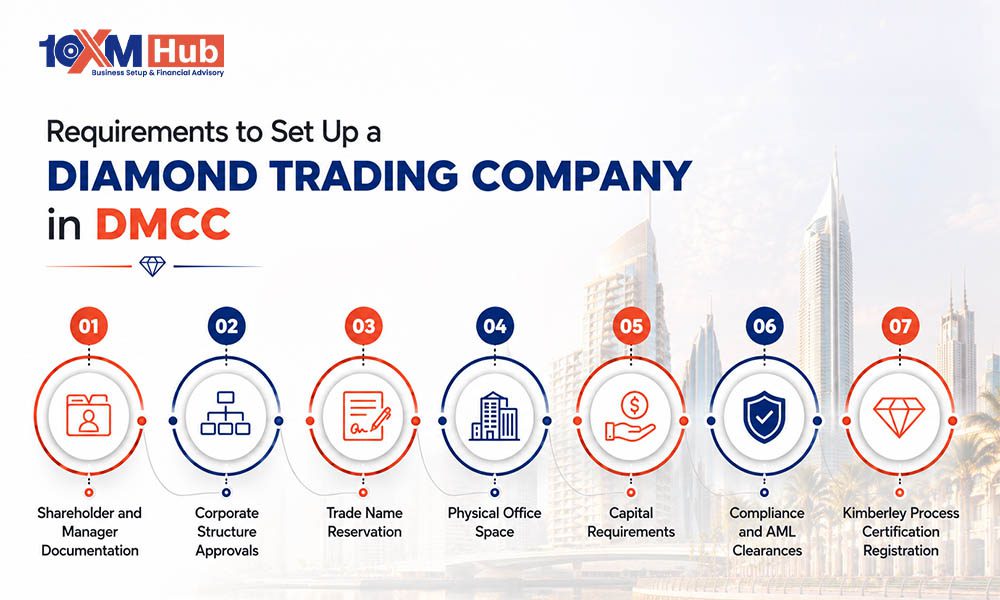
Precious stone dealers face closer scrutiny than most other Free Zone businesses, largely because of anti-money laundering rules specific to the diamond trade. A DMCC business setup in this sector covers the following:
A DMCC diamond trading licence allows entities to import, export, store and wholesale rough, polished, and synthetic stones. DMCC oversees the regulatory framework to maintain consistent compliance standards across all licensed dealers.
Licence holders must meet a defined set of ongoing obligations:
Kimberley Process registration sits alongside the licence as a separate but mandatory step, since it governs the actual movement of rough diamonds across borders. Without it, import and export permits cannot be issued, regardless of licence status. Synthetic stones fall outside this requirement, though they still need to be declared under a distinct trading category on the licence.
Completing diamond company formation in Dubai under this licence also opens membership to the Dubai Diamond Exchange(DDE). That membership gives traders access to international tender rooms and trading platforms, connecting DMCC-based businesses directly to buyers and sellers operating in established diamond markets abroad.
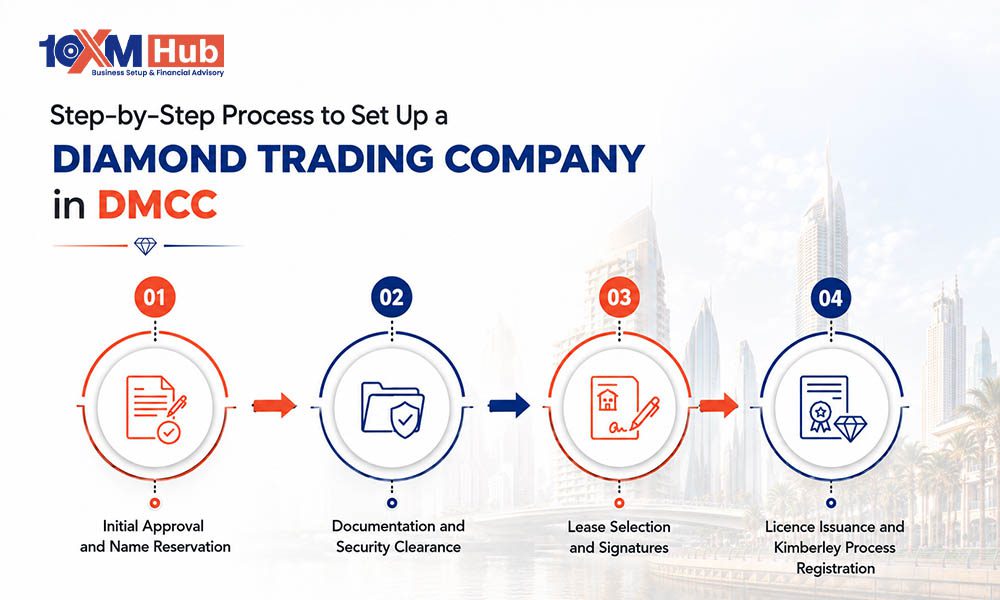
Registering a diamond trading company in DMCC follows a set sequence of approvals, and each step builds on the one before it. Missing documents or activity mismatches at any stage usually push the timeline back, so most applicants move through the process in the order below. The exact requirements at each step depend on the size of the operation and the type of stones being traded.
Initial Approval and Name Reservation
The process starts with an online application that lists the trading activity codes relevant to gem and jewellery commerce. Applicants also reserve a trade name at this point, which must follow DMCC naming conventions and receive formal pre-approval before the file can move forward. Choosing the correct activity codes at this stage matters more than it might seem, since it determines what the eventual licence will and will not permit.
Documentation and Security Clearance
Shareholders and directors submit verified identity records, professional background profiles, and anti-money laundering compliance disclosures for review. This stage involves closer scrutiny than most other Free Zone categories, given the sensitivity attached to precious stone trading and the regulatory obligations that come with it. Corporate shareholders face an added layer of paperwork, including certified incorporation documents and board resolutions.
Lease Selection and Signatures
Applicants finalise a tenancy contract for approved office space or a flexi-desk within DMCC boundaries. Firms planning to store physical stones on site need premises that meet specific vault and safe requirements set by the authority. Once the lease is confirmed, the electronic Memorandum of Association is signed, formally establishing the entity’s legal structure.
Licence Issuance and Kimberley Process Registration
After statutory fees are settled, DMCC issues the commercial licence authorising trading activities. A separate registration with the local Kimberley Process office follows this step, and it is required before any rough diamond shipment can be imported or exported under the new licence. Licence categories differ slightly depending on whether trading activity centres on rough stones, polished stones, or a combination of both.
The sequence above covers the main checkpoints, though the supporting paperwork behind each one varies by shareholder structure and trading activity. Applicants weighing rough-stone trade against polished-stone trade, or both, often find the documentation requirements diverge earlier in the process than expected.
Dubai’s position at the intersection of producing, cutting, and buying markets gives diamond traders a working advantage that few other locations can match. Goods handled within the Free Zone may benefit from preferential customs treatment, subject to the applicable customs rules and the destination of the goods.
Firms operating from DMCC also deal with one regulatory system instead of several overlapping ones across borders. That doesn’t, however, remove the paperwork. Vault standards, AML disclosures, and Kimberley Process registration still require accuracy at each stage, and one missing document can hold up an otherwise straightforward application. Applicants who prepare shareholder records, lease agreements, and compliance manuals correctly the first time tend to move through licensing faster than those who submit incomplete files.
Setting up a diamond trading company in DMCC rewards attention to detail more than speed. The requirements are specific and the review process is thorough. For businesses weighing whether to handle this process independently or bring in outside support, 10XMHub works with clients on exactly this kind of setup. Our team handles the documentation and compliance side of DMCC registration. Reaching out to 10XMHub early in the process can help save time later on.


Share this post :





Turn your network into opportunity. Refer clients to 10XMHub and earn substantial rewards for every successful business setup. We handle your referrals with premium support; you gain trusted commissions and long-term partnership benefits.
Please share your details and we’ll contact you shortly.



